This district cannot be reduced to just a few tourist spots. It is best discovered gradually: through architecture, urban legends, memorial places, museums, and venues where modern Kyiv lives today.
A district where Kyiv began
Legally, the Shevchenkivskyi District was established in 1937. It received its current name in 1957 — before that, it was called Molotovskyi District. In 2001, the district expanded after merging with the former Radianskyi and Starokyivskyi districts. At the same time, some territories, including Vynohradar, were transferred to the Podilskyi District.
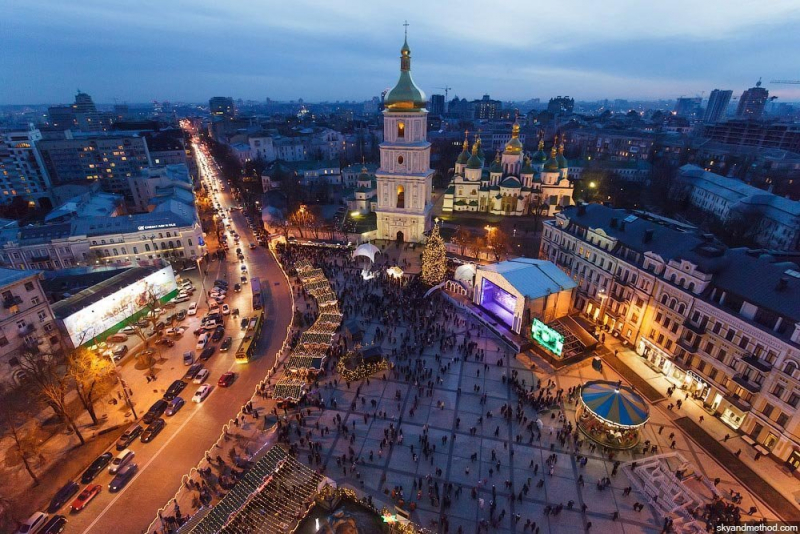
However, the history of this area began long before administrative boundaries existed. The core of ancient Kyiv — Old Kyiv Hill — is associated with the territory of the modern Shevchenkivskyi District. According to legend, Apostle Andrew erected a cross here and foretold the emergence of a great city. Tradition also links this place with Prince Volodymyr’s choice of faith and the era of Yaroslav the Wise — with the strengthening of the statehood of Kyivan Rus.
Within the modern district are located the Golden Gate, Sofiyska Square, the Upper Town, Kudriavets, Tatarka, Lukianivka, part of Shuliavka, Syrets, Dorohozhychi, and other historical areas. According to historical accounts, it was through the Golden Gate that Bohdan Khmelnytsky entered on his way to St. Sophia in 1648.
The Shevchenkivskyi District is also important for Ukraine’s more recent history. The Central Rada operated here, the Universals were proclaimed at Sofiyska Square, and the election of Hetman Pavlo Skoropadskyi took place here. The district is associated with the names of Taras Shevchenko, Ivan Franko, Panteleimon Kulish, Mykhailo Maksymovych, Mykola Kostomarov, Mykhailo Drahomanov, Pavlo Chubynskyi, Ahatanhel Krymskyi, Mykhailo Hrushevskyi, Symon Petliura, Volodymyr Vynnychenko, Heorhii Narbut, the Krychevsky brothers, and Alla Horska.
In 1991, rallies in support of Ukraine’s declaration of independence took place here. Thus, the Shevchenkivskyi District is not only the central part of the capital, but also a space where Ukraine’s political and cultural meanings have repeatedly taken shape.
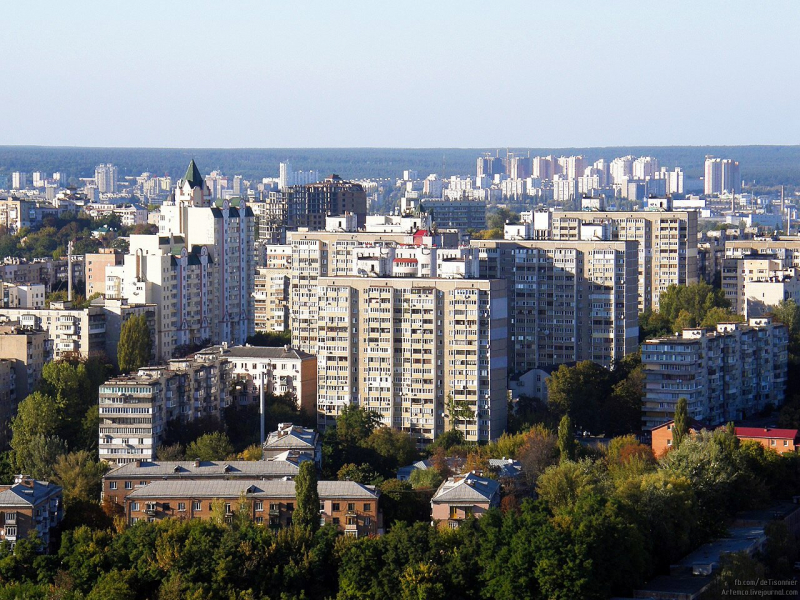
Today, the district covers about 2,700 hectares. It is home to educational institutions, museums, cultural institutions, medical facilities, enterprises, commercial spaces, as well as numerous embassies and representations of foreign states.
St. Andrew’s Church
One of the main architectural landmarks of the district is St. Andrew’s Church. Its history is linked to the legend of Apostle Andrew, who is said to have placed a cross on a Kyiv hill and predicted the emergence of a great city.
According to tradition, in 1215 Prince Mstislav Romanovych built a wooden Church of the Exaltation of the Cross on this site. It burned down during the invasion of Khan Batu. The modern St. Andrew’s Church was constructed in 1747–1762 based on the design by Francesco Bartolomeo Rastrelli.
Old Kyiv Hill, the Tithe Church, and Petro Mohyla’s Linden Tree
Another important location in the district is the area near the Tithe Church, the first stone church of Kyivan Rus. The original Tithe Church, built in the 10th century, has not survived: it was destroyed during the Mongol assault on Kyiv in 1240. A later church, built on this site in the 19th century, was demolished in 1928.
Nearby grows a linden tree which, according to legend, was planted in 1635 by Kyiv Metropolitan Petro Mohyla. Locals call it the Tree of Wishes. According to urban belief, wishes should be made near the tree at sunrise or sunset.
The Golden Gate and Sofiyska Square
The Golden Gate is one of the most important landmarks of ancient Kyiv. It reminds us of the time when the territory of the modern Shevchenkivskyi District was the center of Kyivan Rus.
Nearby is Sofiyska Square, a space important not only for Kyiv but also for Ukrainian statehood. It was here that the Universals of the Central Rada were proclaimed, political gatherings were held, and in modern history — rallies related to the struggle for independence.
The route from the Golden Gate to St. Sophia is one of the shortest ways to see how densely different historical eras coexist in the center of Kyiv.
National Opera of Ukraine
National Opera of Ukraine named after Taras Shevchenko
Volodymyrs'ka Street, 50, Kyiv
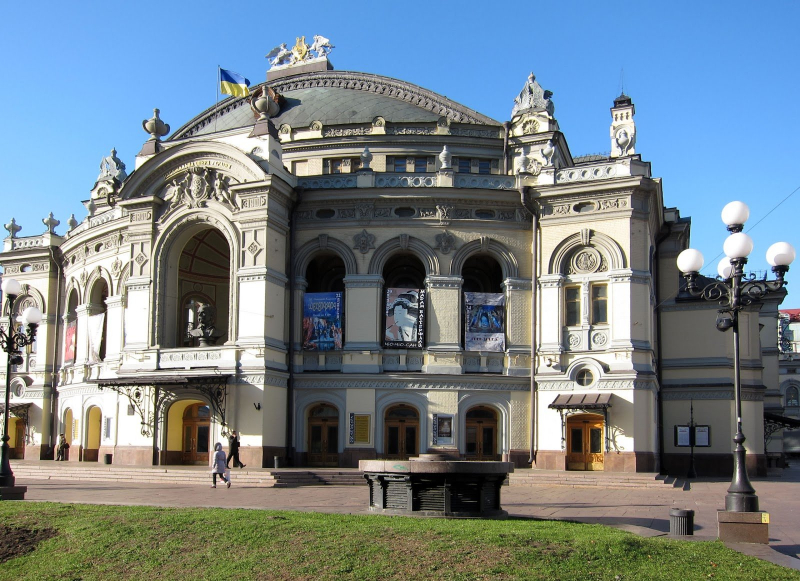
Another important point in the district is the Taras Shevchenko National Academic Opera and Ballet Theatre of Ukraine. The theater is located on Volodymyrska Street, near the Golden Gate, making it easy to include in a walking route through Kyiv’s old center.
The history of Kyiv opera began in 1867, when a permanent opera troupe was established in the city. The current theater building appeared later — after the fire of 1896, which destroyed the previous City Theater. The new structure was built in the late 19th — early 20th century.
Today, the National Opera of Ukraine is not only one of the country’s main cultural institutions, but also a prominent architectural landmark on Volodymyrska Street. You can come here not only for a performance, but also simply include the building in a district маршрут: from the Golden Gate and St. Sophia — to museums, old streets, and cafés of the Shevchenkivskyi District.
Facts verified according to the official website of the National Opera of Ukraine: address — 50 Volodymyrska Street; the theater’s history is connected with the 1867 opera troupe and the 1896 fire of the City Theater.
Red Building of Taras Shevchenko National University of Kyiv
Taras Shevchenko National University of Kyiv
60 Volodymyrska St, Kyiv
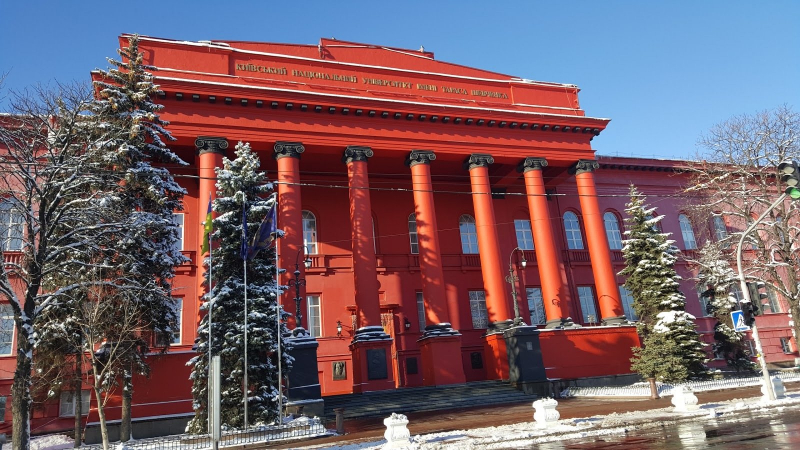
The Red Building of Taras Shevchenko National University of Kyiv is one of the most recognizable structures in the Shevchenkivskyi District and an important stop along Volodymyrska Street. The university was founded in 1834 and is today one of the oldest higher education institutions in Ukraine.
The main building is located near the Fomin Botanical Garden, Shevchenko Park, and the National Opera, making it convenient to include in a walk through the central part of the district. Even without going inside, the building functions as a standalone urban landmark — recognizable, monumental, and closely tied to the educational history of Kyiv.
Tatarka
Tatarka is a historic area between Lukianivka and Podil. Its name is associated with Tatars who moved here from Nizhny Novgorod in the 19th century, fleeing famine. They founded a settlement, built wooden houses, and organized a market where they sold goods and food. According to historians, vendors called out to customers with the phrase “shurum-burum,” roughly meaning “all sorts of things.” The Tatar market resembled a modern second-hand market and existed until 1940.
Today, Tatarka is one of the most interesting areas for those who prefer a lesser-known Kyiv — a city of hills, old streets, and unexpected stories.
Ruins in Variazkyi Lane
Ruins of a Late 19th-Century Manor
8-B Varyazhsky Lane
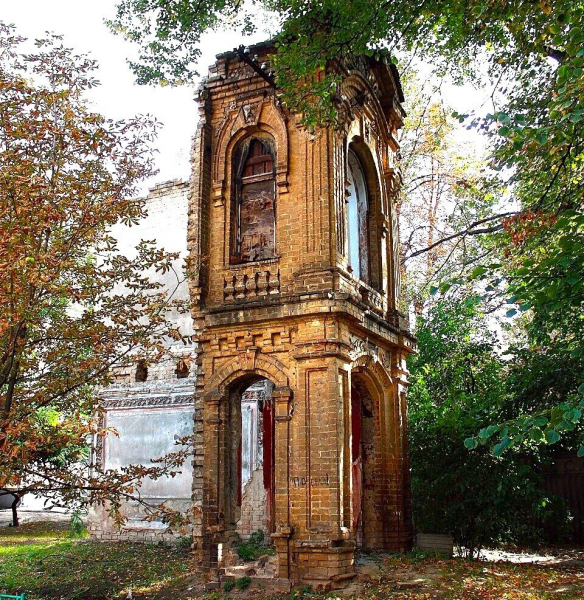
In a quiet courtyard of Variazkyi Lane, the ruins of an old estate remain. According to one version, the writer Ivan Nechui-Levytsky spent the last years of his life here.
The house was built in the late 19th century, but it is not known for certain who its architect or owner was. According to one version, the estate belonged to a capital merchant named Orlov, and the project may have been designed by Volodymyr Nikolaev or Vladyslav Horodetsky.
During the Soviet period, the building served as a dormitory. In the 1980s, it was declared unsafe, residents were relocated, and there were plans to open a Nechui-Levytsky museum there. During restoration, part of the estate collapsed. In the late 1980s, the ruins were granted the status of an architectural monument, but this did not stop their deterioration.
Today, only fragments of the walls with window portals remain. In the 2010s, a public space with cafés and cultural events was created around the ruins.
St. Makarii Church
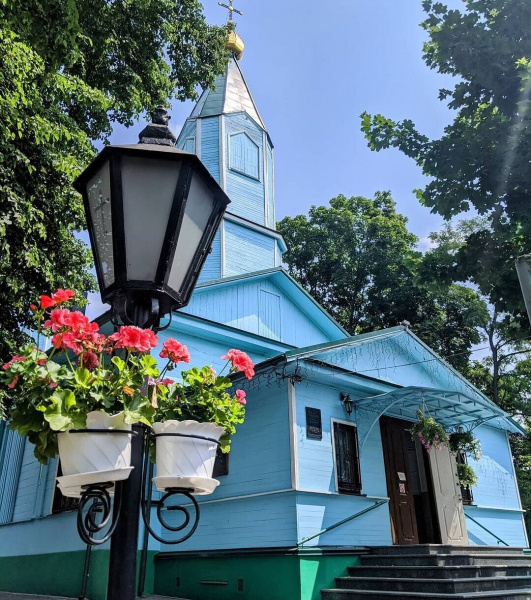
On the hills of Tatarka stands St. Makarii Church — a wooden temple that has survived since pre-revolutionary times. It is more than 125 years old.
The church was built in 1897 in honor of Saint Makarii, Metropolitan of Kyiv and All Rus’. For its construction, materials from the wooden St. Dmitry Church from the Baikove Cemetery were used.
During the Soviet era, the church was closed and its domes were removed. For some time, the building was used as a workshop. In 1942, services were resumed, and after 1945 the restoration of the church began. New icons were painted by Ivan Yizhakevych and his students. Between 1989 and 1991, the domes were rebuilt, and the church regained its original appearance.
Museum in the Dark “Third After Midnight”
Museum in the dark "Three after midnight"
45-B O. Gonchara Street, Kyiv
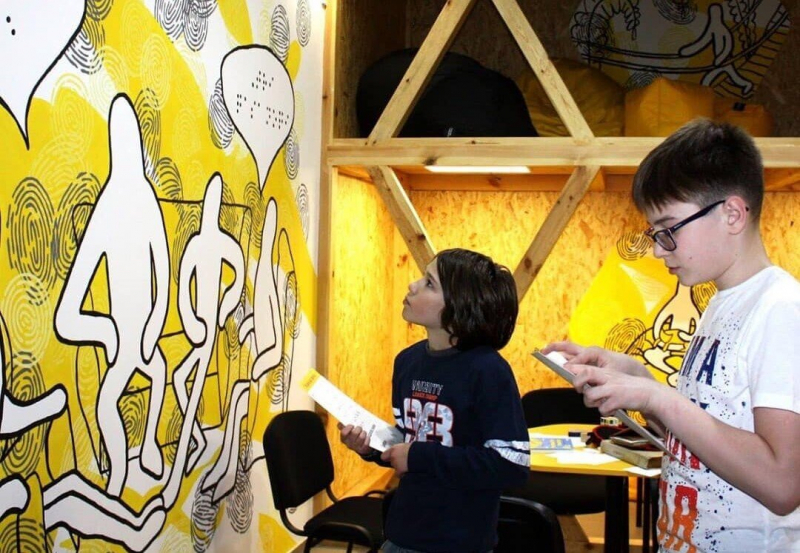
“Third After Midnight” is a museum where visitors temporarily lose their sight and experience space through hearing, touch, smell, and taste. The museum was created in 2017 to break stereotypes about blind people. Visitors are guided by blind guides. Here you can take part in a dinner in complete darkness, go on a blind date, or experience everyday tasks without using your eyes — for example, trying to pour water into a glass.
Where to eat in the Shevchenkivskyi District
The Shevchenkivskyi District easily forms a separate gastronomic guide: from Italian cuisine and pizza to Ukrainian dishes, breakfasts, shawarma, urban cafés, and bakeries.
Vino e Cucina
This is an Italian restaurant on Sichovykh Striltsiv Street spread over three floors: featuring a wine cellar, a wood-fired pizza oven, and a floor with live music. The menu includes antipasti, homemade pasta, risotto, pizza, fresh mozzarella, and an extensive wine list.
It is a great place for a classic Italian dinner or a relaxed lunch with pasta, pizza, and wine.
Zavertailo near Sophia
This café-bakery is located near St. Sophia Cathedral and specializes in in-house baked bread and pastries, as well as seasonal and local products. The menu includes breakfasts, main dishes, kids’ options, hummus with veal, “Zavertailo-style” cutlet, salmon ravioli, butter chicken, and burgers.
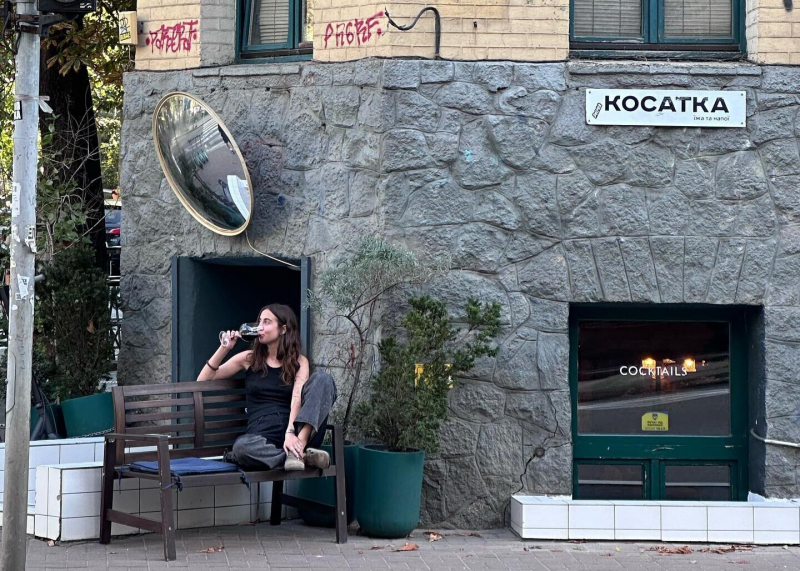
Kosatka
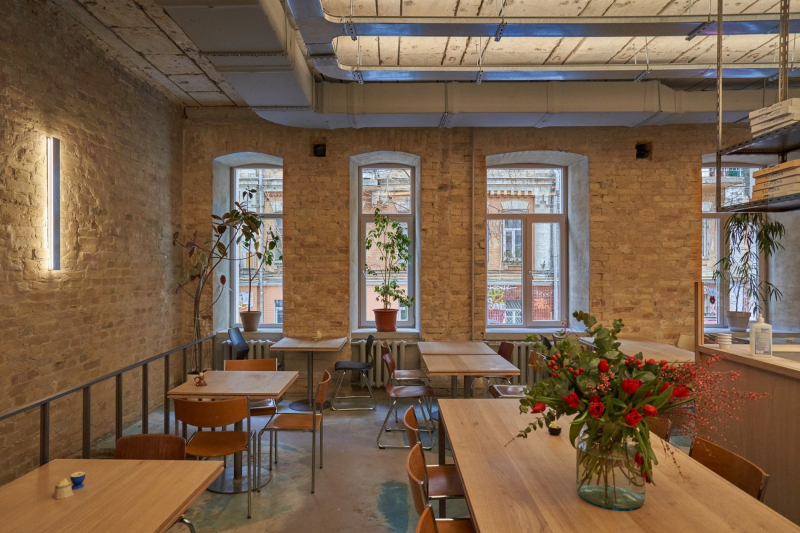
A well-known urban café with a loft-style interior, vintage furniture, and vinyl records. The menu includes all-day breakfasts, sandwiches, burgers, tartare, steaks, meatballs, fish, poultry, and fish & chips. It is a good place for an informal meeting, a late breakfast, or a casual dinner without unnecessary formality.
Zigzag
An urban café on Reitarska Street with European cuisine in an авторська (signature) interpretation. The menu includes syrnyky (cheese pancakes), Eggs Benedict, waffles, avocado toast, tartare, baba ghanoush, hummus, pasta, burgers, and desserts.
“Zigzag” fits well into a walk along Reitarska Street: after exploring courtyards, galleries, and small shops, this is a good place to stop for coffee, breakfast, or dinner.
T.C. Pizza
A bright venue on Olesia Honchara Street with an open kitchen and a wood-fired pizza oven. The menu includes pizza, pasta, burgers, steaks, chicken Parmigiano, and salads. It’s a convenient stop after a walk around the district or before visiting the “Third After Midnight” museum, which is also located on this street.
The Shevchenkivskyi District is just one of Kyiv’s ten districts, each with its own history, architecture, green spaces, and places worth visiting. If you want to continue exploring urban routes and see the capital more broadly, also read our guide “Kyiv districts: TOP places to visit” — about key locations in the Holosiivskyi, Darnytskyi, Desnianskyi, Dniprovskyi, Obolonskyi, Pecherskyi, Podilskyi, Sviatoshynskyi, Solomianskyi, and Shevchenkivskyi districts.